
Expert Edge protection for commercial flat roofs solutions
Ensuring the safety of personnel working on elevated surfaces is a fundamental responsibility for any building owner or facilities manager. When it comes to industrial and retail properties, the implementation of expert edge protection for commercial flat roofs solutions is not merely a recommendation but a legal necessity. Commercial flat roofs are often busy environments, housing HVAC units, solar panels, and communications equipment that require frequent maintenance. Without the right physical barriers in place, every visit to the roof carries a significant risk of a fall from height, which remains one of the leading causes of workplace fatalities in the UK.
The primary goal of any collective protection system is to remove the reliance on individual PPE or worker behaviour. By installing a permanent or semi-permanent guardrail, you create a safe zone that protects everyone, regardless of their level of height safety training. These systems are designed to be robust and durable, capable of withstanding the unpredictable British weather while providing a clear visual and physical boundary. As we look at the various options available, it is clear that a tailored approach is essential because no two commercial roofs are identical in terms of layout or structural integrity.
Understanding the specific challenges of flat roof environments is the first step toward compliance. Many modern commercial buildings use high-performance membranes or felt surfaces that must not be compromised during the installation of safety equipment. This has led to the rise of non-penetrating systems that use weighted bases to stay in place. This guide will explore the technical aspects, legal requirements, and best practices for selecting and maintaining these vital safety systems.
The Importance of Collective Fall Protection
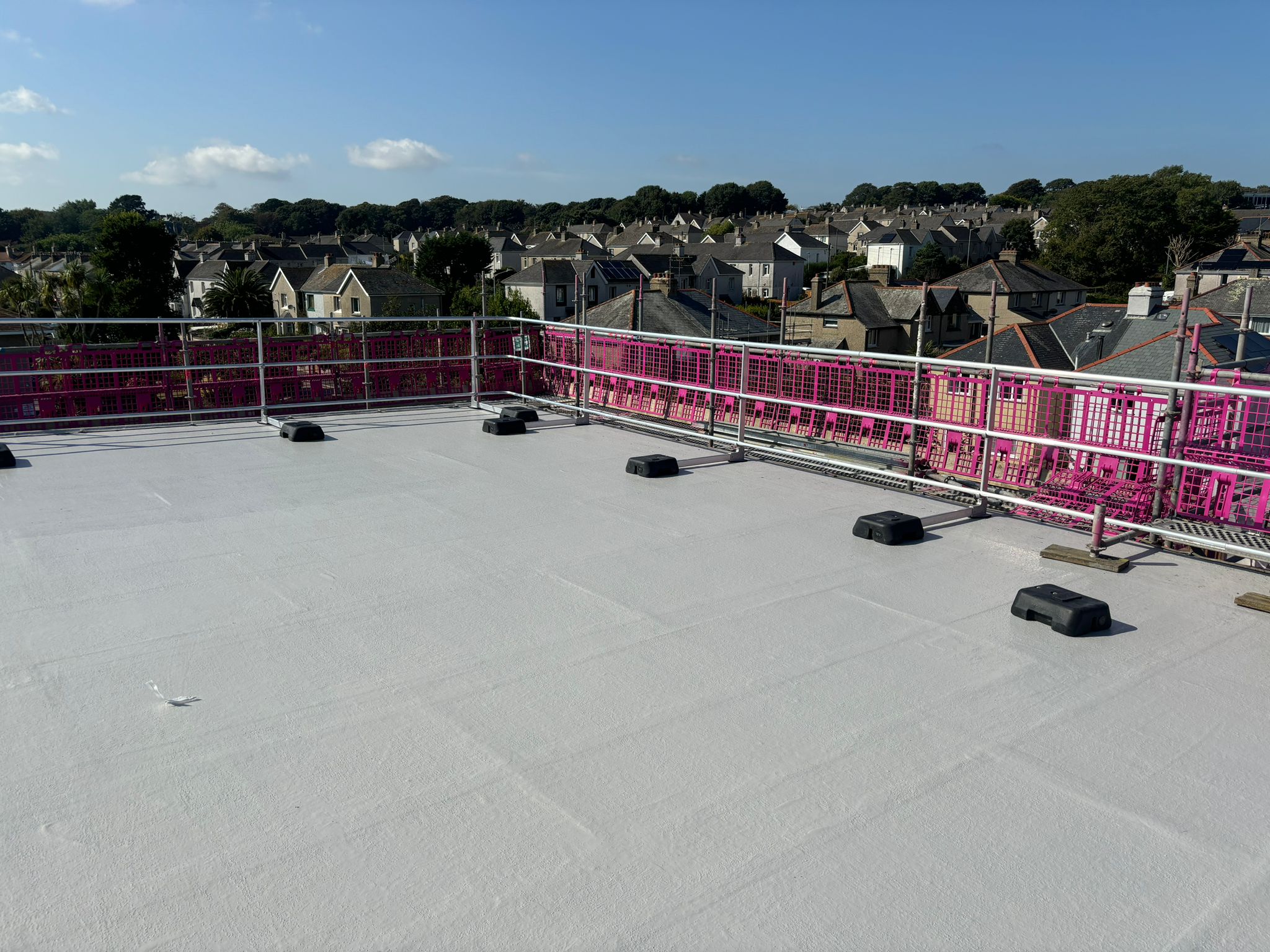
In the hierarchy of risk management, collective protection always takes priority over personal protection. This means that a physical barrier like a guardrail is preferred over a harness and lifeline. The reason is simple: a guardrail protects everyone on the roof without requiring them to wear specialist gear or clip into an anchor point. When you invest in expert edge protection for commercial flat roofs solutions, you are choosing a system that is always active and cannot be misused by an untrained contractor.
Collective systems are particularly valuable on commercial flat roofs where multiple trades may need access throughout the year. A plumber fixing an air conditioning leak might not have the same height safety training as a specialised roofing contractor. By having a perimeter guardrail in place, the building owner ensures that the plumber stays safe without needing to provide additional safety equipment. This reduces the administrative burden on the site manager and significantly lowers the chance of a human error leading to a fall.
Furthermore, these systems provide a psychological sense of security. Workers who feel safe are generally more productive and can focus on the task at hand rather than worrying about their proximity to a dangerous edge. On large flat roofs, it is easy for a worker to become disoriented, especially in poor weather conditions or failing light. A sturdy guardrail system acts as a constant reference point and a physical stop that prevents accidental overstepping.
Legal Compliance and UK Safety Standards
Operating a commercial property in the UK means adhering to the Work at Height Regulations 2005. These regulations state that duty holders must do everything reasonably practicable to prevent anyone from falling. If a roof is accessed for maintenance, even once a year, the law requires a risk assessment and the implementation of appropriate safety measures. Using expert edge protection for commercial flat roofs solutions helps businesses meet these legal obligations and avoid the heavy fines associated with HSE non-compliance.
The equipment itself must meet specific British Standards, most notably BS EN 13374. This standard classifies edge protection based on the pitch of the roof and the potential loading it might face. For flat roofs, Class A is typically the standard, as it is designed for surfaces with an incline of up to 10 degrees. These rails are tested to ensure they can withstand a person leaning against them or a sudden impact from a falling worker. Without this certification, a safety rail is just a piece of metal and may fail when it is needed most.
Another critical aspect of compliance is the regular inspection of the equipment. The law requires that all safety systems are inspected by a competent person at least once every twelve months. During these checks, the inspector will look for signs of corrosion, loose fixings, or movement in the base weights. Keeping a detailed log of these inspections is vital for insurance purposes and to prove a commitment to safety in the event of an audit.
Technical Specifications of Edge Protection for Commercial Properties
Modern safety systems are a far cry from the heavy, rusted steel pipes of the past. Today, the best solutions utilise lightweight but incredibly strong materials like galvanised steel or aluminium. These materials are chosen for their corrosion resistance, which is vital for equipment that will spend decades exposed to rain and frost. Aluminium systems are particularly popular for commercial roofs because they are easy to transport to the rooftop and put less stress on the building structure.
The design of the system often depends on the roof type. For many commercial buildings, a freestanding system is the ideal choice. These systems use recycled PVC or concrete weights to hold the uprights in place through friction and gravity. This avoids the need to drill into the roof membrane, which could lead to leaks and expensive structural damage. The weights are designed to be aerodynamic, ensuring that high winds do not cause the system to shift or “walk” across the roof surface over time.
For roofs where aesthetics are a concern, such as office blocks or hotels, folding guardrail systems are available. These can be laid flat when not in use, making them invisible from the ground level. When maintenance is required, they can be quickly lifted and locked into a vertical position. This provides the perfect balance between architectural beauty and the necessity for expert edge protection for commercial flat roofs solutions.
Installation Best Practices for Long-Term Safety
The effectiveness of a safety system is only as good as its installation. It is vital that the team performing the work is highly trained and understands the nuances of different roof constructions. Before any equipment is moved to the roof, a full site survey should be conducted. This survey identifies fragile areas, such as skylights or old roof lights, which must also be protected. Falling through a fragile roof is just as dangerous as falling over the edge.
During the installation process, the spacing between uprights must be strictly managed according to the manufacturer’s specifications. If the uprights are too far apart, the rail may flex too much under pressure. If they are too close, it may add unnecessary weight to the roof. A professional installer will also ensure that the “toe-boards” are fitted if there is a risk of tools or materials being kicked off the edge and hitting pedestrians below. This is a common requirement for roofs that border public pavements or busy loading bays.
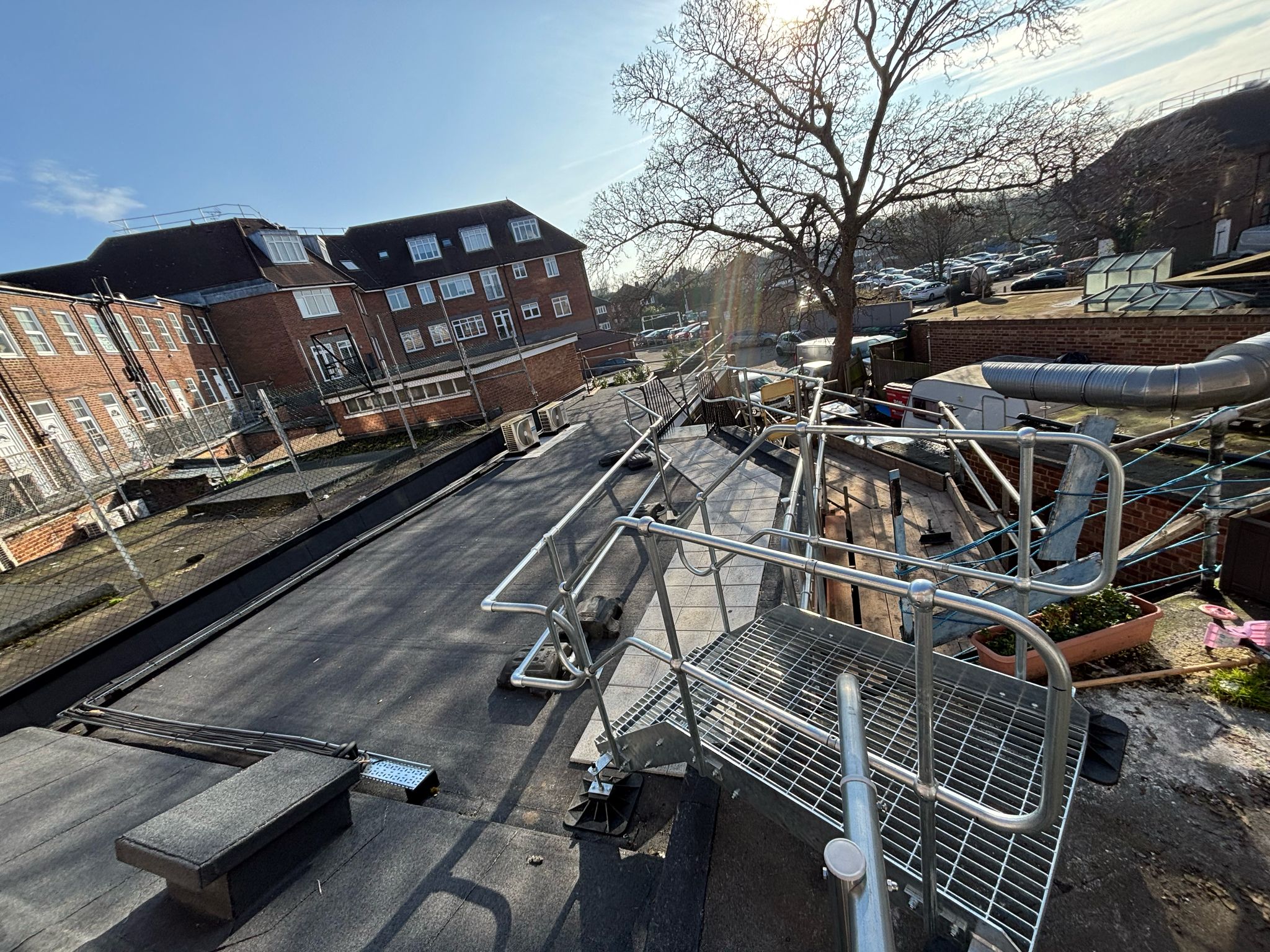
Another factor to consider is the integration with other access equipment. The guardrail should lead safely to and from the access point, whether that is a roof hatch or a fixed Katt ladder. There should be no “gap” where a worker is unprotected as they transition from the ladder to the roof surface. Using self-closing gates at these entry points ensures that the perimeter remains secure at all times, even if a worker forgets to close the gate behind them.
Common Challenges on Commercial Roofs
Commercial roofs are rarely empty spaces. They are often cluttered with pipes, cables, and plant machinery that can make a standard guardrail installation difficult. This is where bespoke engineering becomes necessary. Professional safety teams can design “step-overs” that allow the guardrail to continue over obstacles without compromising the safety of the perimeter. These step-overs are integrated into the main system to provide a continuous and safe path for the worker.
Environmental factors also play a massive role in the longevity of the system. In coastal areas, the salt in the air can cause standard metals to corrode at an accelerated rate. In these environments, it is essential to use high-grade galvanised steel or specialised coatings. Furthermore, in areas prone to high winds, the calculation for the base weights must be adjusted. A system that is safe in a sheltered city centre might not be sufficient for a warehouse on a wind-swept moor.
Finally, the issue of “fragile” roofs is a significant challenge in the commercial sector. Many older industrial units have asbestos cement or thin metal sheets that cannot support the weight of a person. In these cases, the edge protection must be combined with roof walkways. These walkways distribute the weight of the worker and the safety system across the structural beams of the building, ensuring that the roof surface remains intact and the worker remains safe.
Frequently Asked Questions
Do I legally need edge protection if my roof is flat?
Yes, if anyone is required to access the roof for any reason, you must provide a safe way for them to work. The Work at Height Regulations apply to all heights where a fall could cause injury. For commercial flat roofs, a collective protection system like a guardrail is the most effective way to comply with the law and protect your workers.
Can guardrails be installed without drilling into my roof?
Absolutely. Most modern expert edge protection for commercial flat roofs solutions use a freestanding, counterbalanced design. These systems use heavy weights to stay in place, meaning there is no need to puncture the waterproof membrane. This protects the integrity of your roof and prevents future leaks while still providing a high level of fall protection.
How often should my roof safety system be inspected?
Under UK law and the BS EN 13374 standard, all roof safety systems must be inspected and certified by a competent person at least every 12 months. If the roof is in a particularly harsh environment or is used very frequently, you may want to increase the frequency of these checks to ensure everything remains in top condition.
What is the difference between fall arrest and edge protection?
Edge protection is a collective system designed to prevent a fall from happening in the first place. Fall arrest is a personal system, like a harness and wire, designed to catch a worker after they have fallen. In the eyes of the HSE, preventing a fall with edge protection is always the preferred and safer option.
Can guardrails be customised for different roof shapes?
Yes, safety systems are highly modular. They can be designed to follow the exact perimeter of your building, including corners, curves, and changes in level. Expert installers can also include gates, step-overs, and specialized fixings to ensure that every part of your specific roof layout is fully protected.
Share This Story, Choose Your Platform!
About the Author: Elite Safety Solutions