
Mansafe roof safety systems: A Comprehensive Guide to Height Safety
Ensuring the safety of workers at height is a critical responsibility for building owners, facilities managers, and employers across the United Kingdom. When discussing professional fall protection, the term Mansafe roof safety systems is frequently used to describe the essential infrastructure required to prevent falls from height. These systems provide a secure environment for contractors, maintenance teams, and surveyors who must access rooftops to service plant machinery, inspect gutters, or maintain solar panels. By installing a high-quality safety system, a business demonstrates a commitment to the welfare of its workforce while ensuring strict adherence to national safety legislation.
The concept of a mansafe system encompasses a variety of technical solutions, ranging from horizontal lifelines and anchor points to collective barriers. The primary objective is to create a reliable method of fall restraint or fall arrest that allows a worker to carry out their duties without the constant threat of a fatal accident. Because every roof is unique in its construction, pitch, and surface material, these systems must be carefully engineered to suit the specific environment. A warehouse with a metal profile roof requires a different approach than a heritage building with a lead-covered flat roof or a modern office block with a fragile glazed atrium.
In this guide, we will explore the different types of Mansafe roof safety systems available, the legal framework that governs their use, and the technical requirements for installation and maintenance. Understanding these elements is vital for anyone responsible for property management, as it ensures that the safety measures in place are not only effective but also legally compliant.
The Different Types of Mansafe Systems
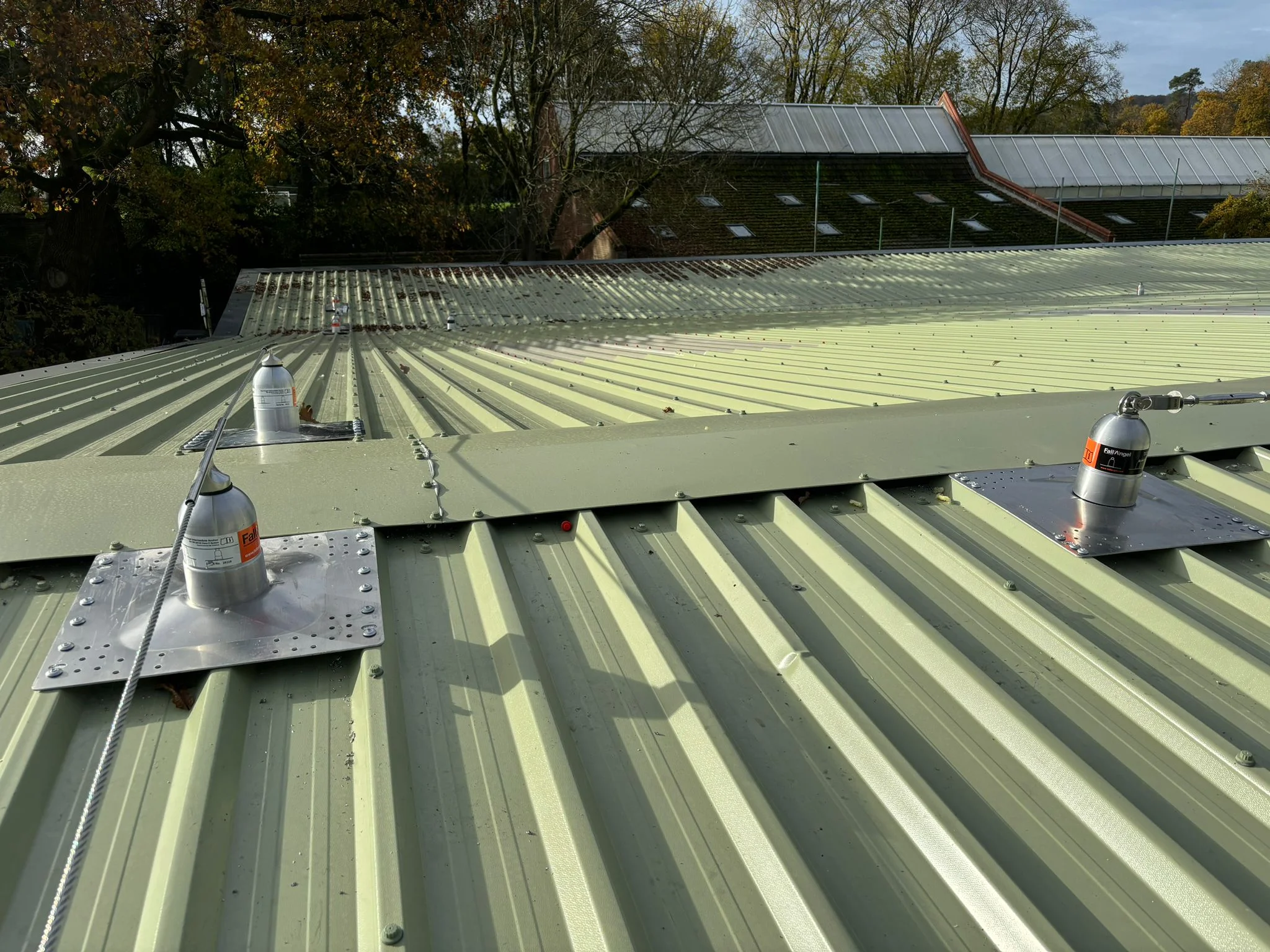
There are several ways to implement Mansafe roof safety systems depending on the level of risk and the nature of the work being performed. The most common solution is the horizontal cable system, which consists of a stainless steel wire tensioned between a series of fixed anchor posts. Workers attach themselves to this wire using a lanyard and a mobile slider, allowing them to traverse the roof perimeter or access central plant areas while remaining securely tethered. These systems are favoured for their versatility and low visual impact, making them ideal for buildings where aesthetics are a priority.
Another essential component of modern height safety is the use of fixed anchor points or eyebolts. These are often used in smaller areas or at specific points of transition, such as near a roof hatch or at the top of an access ladder. An eyebolt provides a single, tested point of attachment for a worker’s PPE. While effective, they offer less mobility than a continuous cable system and are typically used for tasks that require a worker to remain in a relatively static position. For more complex layouts, abseil posts or davit systems may be installed to allow for industrial rope access, which is often necessary for window cleaning or external façade maintenance on high-rise structures.
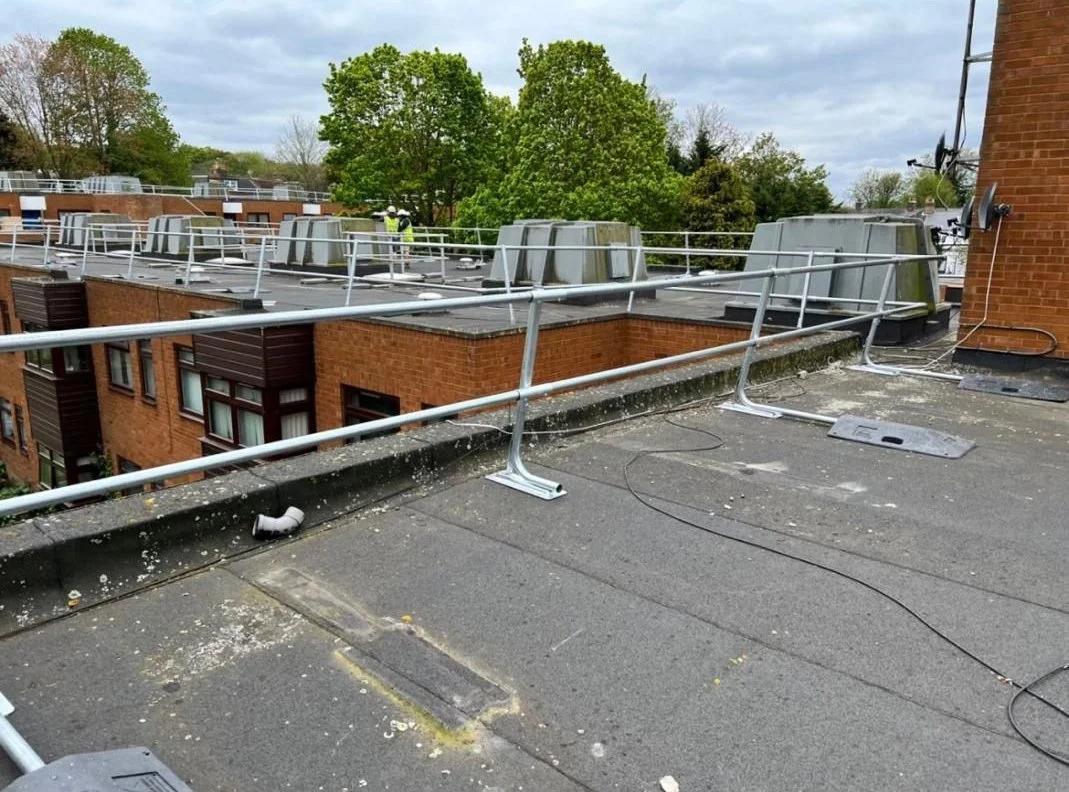
Collective protection, such as guardrails and handrails, also falls under the broad category of mansafe solutions. While cable systems are considered “active” protection because they require the worker to use PPE, guardrails are “passive” or “collective” systems. These provide a physical barrier that prevents a person from reaching the roof edge entirely. In many scenarios, a combination of these methods is used to provide the highest level of safety. For instance, a guardrail might protect a main walkway, while a cable system is used to access more remote or narrow sections of the roof where a permanent rail is not practical.
Legislation and the Work at Height Regulations
In the UK, all work performed at height is governed by the Work at Height Regulations 2005. These regulations place a strict legal duty on employers and building owners to ensure that all work is properly planned, supervised, and carried out by competent persons. Central to these rules is the “hierarchy of control,” which dictates how safety measures should be selected. The first priority is always to avoid working at height if possible. If the work must be done, the next step is to use equipment that prevents a fall, such as roof safety systems designed for fall restraint.
Fall restraint systems are configured so that the length of the lanyard prevents the worker from ever reaching the edge of the roof or a fragile area. This is significantly safer than a fall arrest system, which is designed to catch a worker after a fall has occurred. While fall arrest is sometimes necessary, it introduces additional risks, such as the potential for the worker to strike the building during the fall or the danger of suspension trauma if they are not rescued quickly. Therefore, a professionally designed mansafe system will prioritise restraint whenever the roof geometry allows for it.
Compliance with these regulations is not a one-time event but an ongoing obligation. Failure to provide adequate safety systems can lead to severe penalties from the Health and Safety Executive (HSE), including heavy fines and potential imprisonment for directors in the event of a serious accident. Furthermore, insurance providers often require proof of a certified safety system before they will cover a commercial property. Having Mansafe roof safety systems in place is a vital component of a robust risk management strategy that protects both the workers and the business itself.
Engineering and Installation Requirements
The installation of a mansafe system is a highly technical process that must be carried out by accredited professionals. Before any hardware is fixed to the building, a structural analysis should be performed to ensure that the roof can withstand the loads generated in the event of a fall. For a fall arrest system, the forces exerted on the anchor points can be immense, often exceeding several kilonewtons. If the base material is weak or the fixings are incorrect, the entire system could fail, leading to catastrophic results.
Modern installation techniques have evolved to accommodate a wide range of roof types without compromising the building’s water tightness. On standing seam roofs, specialised clamps are used to attach the system to the ribs of the metal sheets, avoiding the need for any penetrations. On flat roofs with single-ply membranes or bitumen, “toggle” fixings or heavy-duty base plates are used, which are then weathered by a roofing specialist to ensure a leak-free finish. A high-quality installation of Mansafe roof safety systems will seamlessly integrate with the existing roof structure, providing safety without causing long-term maintenance issues for the building owner.
The materials used in these systems are chosen for their extreme durability. Components are typically manufactured from Grade 316 stainless steel or galvanised steel to prevent corrosion, which is a major concern for equipment permanently exposed to the elements. In coastal or industrial environments where the air is particularly corrosive, additional coatings may be applied. Every component, from the cable itself to the smallest hexagonal nut, must be part of a tested and approved system that meets British Standards such as BS EN 795 or BS EN 8610.
Maintenance and Annual Certification
Once a system is installed, it is not simply a case of “fit and forget.” UK law and relevant British Standards require that all Mansafe roof safety systems are inspected and re-certified at least once every twelve months. This is a critical safety requirement because environmental factors, building movement, and general wear and tear can compromise the integrity of the system over time. During an annual inspection, a competent person will perform a series of checks, including a visual inspection of all components and a physical pull-test of the anchor points.
The pull-test involves using a calibrated hydraulic device to apply a specific load to the anchors to ensure they remain securely fixed to the structure. The inspector will also check the tension of the cable, look for signs of fraying or kinking, and ensure that all moving parts, such as sliders and gates, are functioning correctly. If a system fails any part of the inspection, it must be taken out of service immediately and marked with “Do Not Use” tags until repairs can be made. This ensures that no worker ever relies on a faulty system.
Detailed record-keeping is a vital part of this process. After a successful inspection, the building owner is issued with a certificate of compliance, which should be kept in the health and safety file. It is also common practice to install a weather-resistant tag at the entry point of the roof, clearly stating the date of the last inspection and the date the next one is due. This allows any contractor arriving on-site to see at a glance that the Mansafe roof safety systems are safe to use, giving them the confidence to perform their work securely.
Choosing the Right Solution for Your Property
Selecting the correct height safety solution requires a balance between safety requirements, operational needs, and budget. For many property managers, the goal is to find a system that provides comprehensive coverage with minimal ongoing costs. While a collective system like a guardrail may have a higher initial installation price, it requires less user training and has simpler maintenance requirements than a cable-based system. However, on many modern buildings, a guardrail is visually intrusive, making Mansafe roof safety systems based on cables the preferred choice for architects and planning departments.
It is also important to consider the “user journey” from the moment they arrive at the building. A complete safety solution starts at the access point. This might involve a fixed Katt ladder with a vertical safety rail, leading to a roof hatch, and then onto a designated walkway protected by a mansafe wire. By thinking about the entire process of moving across the roof, you can identify potential gaps in protection. For instance, a worker is most at risk when transitioning from a ladder to the roof surface, so this area must be carefully managed with appropriate anchors or handrails.
Ultimately, the best way to ensure the safety of your building is to partner with a specialist height safety consultancy. They can provide a full site audit, identify the specific risks associated with your roof, and design a bespoke system that meets all legal requirements. By investing in professional roof safety systems, you are not just buying hardware; you are buying peace of mind, knowing that every person who steps onto your roof is protected by the best equipment available.
Mansafe roof safety systems Frequently Asked Questions
What is the difference between a mansafe system and a guardrail?
A mansafe system is typically an “active” fall protection solution, such as a wire or anchor, that requires the worker to wear a harness and clip in. A guardrail is a “passive” or collective system that provides a physical barrier, meaning no individual PPE or specialist training is required to stay safe near the edge.
How many people can use a mansafe wire at once?
This depends entirely on the design and testing of the specific system installed. Most horizontal Mansafe roof safety systems are designed to support two or three users simultaneously, but this must be confirmed by the manufacturer’s specifications and the signage at the roof entry point.
Do I need a mansafe system if my roof is only accessed once a year?
Yes. The frequency of access does not change the legal requirement to prevent falls. Even if a roof is only accessed annually for a gutter clean or a lightning protection test, a risk assessment must be performed and appropriate safety measures, such as a certified mansafe system, must be in place.
Can a mansafe system be installed on a fragile roof?
Installing a system on a fragile roof is complex and requires a combination of walkways and safety lines. The goal is to ensure the worker never steps on the fragile material itself. Expert installers will use specialized fixings that attach to the building’s structural purlins rather than the fragile sheets.
What happens if my mansafe system fails its annual inspection?
If a system fails, it must be decommissioned immediately. It is a legal requirement to prevent anyone from using a non-compliant system. You should arrange for a specialist safety team to carry out the necessary repairs or part-replacements, after which the system can be re-tested and returned to service.
If you would like help with your own site, get in touch with the team at Elite Safety Solutions.
Share This Story, Choose Your Platform!
About the Author: Elite Safety Solutions