
Roof Access Ladder: How to Choose a Safe Way onto the Roof
If you have ever had to climb onto a roof for a routine job, you will know how quickly a simple task becomes a worry. The ladder you use to get up there matters just as much as the protection you have once you arrive. A properly designed roof access ladder gives you a safe, permanent and controlled way onto the roof, every time, for everyone who needs to go up.
At Elite Safety Solutions we install and certify roof safety systems across the UK, and access is something we are asked about constantly. This guide explains what these ladders are, the different types, what the rules expect of you and how to choose the right one for your building. It is written for building owners, facilities managers and anyone who is responsible for people working on a roof.
What is a roof access ladder?
Put simply, it is a permanently fixed ladder that gives authorised people a safe route from ground level, or from a lower roof, up to a higher roof. It is usually made from galvanised steel or aluminium, bolted to the structure of the building, and built to carry a person and their tools for many years.
It is different from the portable ladder that sits in a van or a store cupboard. A portable ladder is a piece of equipment you carry to the job. A fixed ladder is part of the building. It is always in the same place, it is inspected as part of your maintenance routine and it does not depend on someone remembering to bring the right ladder on the day.
That consistency is the real benefit. When access is fixed and designed, contractors know where to go, you know who is on the roof and the whole route can be protected, from the first rung to the roof hatch or the edge protection at the top.
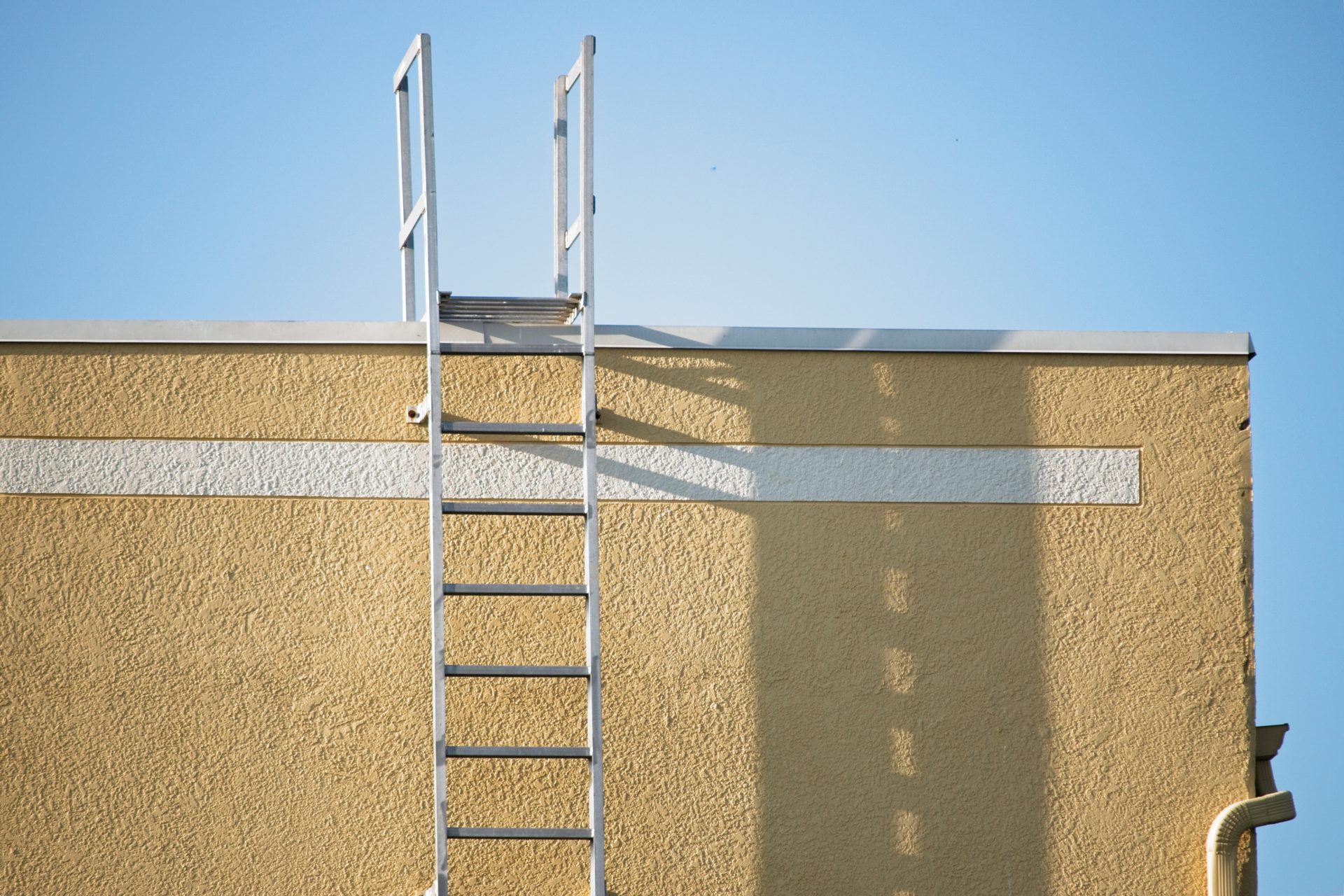
Why a fixed roof access ladder is safer than a portable one
Falls from height remain one of the biggest causes of workplace deaths in the UK, and a large number of those incidents involve ladders. Portable ladders can slip, tip or be set at the wrong angle, and they are often left in place at the wrong time or used by people who should not be on the roof at all.
A fixed roof access ladder removes most of those risks. It cannot slip at the base, it cannot be borrowed for another job and it can be fitted with features that stop unauthorised use. It also makes your safety paperwork far simpler, because the route onto the roof is a known, inspected and documented part of the building.
There is a cost saving too. Roof contractors, gutter cleaners, solar installers and maintenance teams all need to get up there. If the access is quick and safe, they spend less time on set-up, and you spend less time managing the risk.
Types of roof access ladder
There is no single design that suits every building. The right choice depends on the height, the space around the ladder and how often people will use it. These are the main types we come across.
- Fixed vertical ladders: the most common type. A straight ladder fixed to a wall, usually with a hoop or cage at the higher levels, or with a fall arrest system running alongside it.
- Fixed inclined ladders: set at an angle rather than vertically, which makes them easier to climb carrying tools. They need more floor space but are a good choice where people go up often.
- External wall ladders: mounted on the outside of the building and taken up to the parapet or roof edge. These are common on commercial and industrial units.
- Internal ladders to a roof hatch: fitted inside the building and leading to a roof hatch. They keep the ladder out of sight and out of reach of the public.
- Ladders with a security guard: a lockable door or panel across the lower rungs that stops unauthorised people from climbing.
Each of these can be made in galvanised steel for strength and longevity, or in aluminium where weight and corrosion are the main concern. We will usually recommend galvanised steel for external ladders in exposed locations, because it copes well with the British weather.
What the rules say about roof access ladder safety
In Great Britain, the Work at Height Regulations 2005 apply to any work where a person could fall far enough to injure themselves. Before anyone goes up, the regulations expect you to avoid work at height where you reasonably can, prevent falls where you cannot avoid it, and reduce the effect of a fall if it still might happen. If you would like the full picture, our guide to working at height regulations in the UK explains what you must know.
Where a ladder is a permanent part of the building, the relevant British Standard is BS 4211, which covers fixed ladders for permanent access to structures. It sets out the expected dimensions, the strength of the fixings and the safety features that are needed at different heights. A well-made fixed ladder will be designed and installed to meet it.
The person responsible for the building, often called the duty holder, must make sure the access is safe, suitable and maintained. That means the ladder has to be strong enough, in good condition and used only by people who are competent to use it. It is not enough to install the ladder and forget about it.
Safety features to look for in a roof access ladder
When you compare options, the details matter. Here are the features we would expect to see on a good installation.
- Hoops or a safety cage: on taller ladders, hoops help to stop a climber falling backwards, although they are not a substitute for a proper fall arrest system.
- A fall arrest system: a rail or cable running alongside the ladder, so the climber can clip on at the bottom and stay attached all the way up. This is often the better choice on taller ladders.
- Rest platforms: on very long climbs, an intermediate platform gives people somewhere safe to pause.
- A safe landing at the top: handrails or a gate where the climber steps off, so they never have to reach across a gap with nothing to hold.
- Anti-climb or lockable guards: to stop children and unauthorised visitors from using the ladder.
- Corrosion-resistant finishes: hot-dip galvanising for steel ladders that will stay outside all year.
If you are unsure how fall arrest differs from fall restraint, we have explained the distinction in fall arrest vs fall restraint, and it is worth a read before you specify anything.
How to choose the right fixed roof access ladder
Choosing the right ladder is a matter of working through a handful of simple questions. We would suggest you start with these.
How high is the roof?
Height decides almost everything. A short ladder to a single-storey roof is a very different job from a long climb up the side of a warehouse. Taller climbs usually need a fall arrest system, a rest platform or both, and the fixings need to be designed for the extra load.
How often will people use it?
A ladder used once or twice a year for an inspection has different needs from one used daily by a maintenance team. Frequent use points towards an inclined ladder or a stair, which are more comfortable and safer when people carry tools.
What is the building made of?
The structure has to support the ladder. We check what the wall or frame is made of before we recommend a design, because the right fixings for brick are not the right fixings for a thin cladding panel. This is one reason we always survey first.
Where does the ladder come out?
The top of the ladder is where the risk is highest, because the climber must step from the ladder to the roof. If the ladder comes out at a roof hatch, the hatch must be large enough and safe to use. If it comes out at an edge, the edge needs protection so the climber is not stepping towards an unprotected drop.
Who needs to be kept off?
If the ladder is on an external wall that the public can reach, you will need a lockable guard or an anti-climb section. Internal ladders to a hatch are naturally more secure, but they should still be managed.
Protecting the roof once people are up there
A good roof access ladder is only the first half of the job. Once people reach the roof, they need protection from the edge and a way to move around safely. Depending on the roof, that might mean guardrails, a mansafe system or guardrails, or both. Our guide to those two options is a useful next step if you are not sure which suits your roof.
Thinking about the whole route together, from the ground to the roof and across it, almost always gives you a safer and cheaper result than treating each part separately. It also means one company is responsible for the design, which makes certification much simpler.
Inspection and maintenance
A fixed ladder is safety equipment, so it needs looking after. At the very least it should be visually checked before use, and examined by a competent person on a regular basis. Fall protection equipment generally needs a formal examination at least every twelve months, and sooner if it has been used in a fall or has suffered damage.
Things we look for during an inspection include loose or corroded fixings, bent or cracked rungs, damaged guards, worn fall arrest components and anything that has been added to the ladder since the last check. If you want to know more about how often equipment should be tested, our article on how often fall protection equipment needs testing goes through it in detail.
Keep a record of every inspection. A simple log with the date, who carried out the check and what was found is useful evidence if anyone ever asks how you manage the risk.
Common mistakes with roof access
- Leaving a portable ladder permanently tied to a wall, where it can be used by anybody.
- Fitting a cage and assuming this makes the ladder safe, when a fall arrest system would do more to protect the climber.
- Forgetting about the top of the ladder, so people have to step onto an unprotected roof edge.
- Choosing the cheapest fixings without checking what the wall can actually support.
- Skipping the regular inspection because the ladder looks fine from the ground.
All of these are easy to avoid when the ladder is properly designed, and each one is a problem we are regularly asked to put right.
What does a roof access ladder cost?
Prices vary widely, because every building is different. A short galvanised ladder to a low roof will cost far less than a tall external ladder with a fall arrest system, a rest platform and a lockable guard. The main factors are the height, the materials, the safety features you need and how difficult the building is to work on.
Rather than guess, we would always recommend a short site visit. We measure the building, check the structure and recommend a design that meets your needs without paying for anything you do not need. If it helps to see how pricing works for a similar product, our article on the cost of Katt ladder fall protection is a good starting point.
Why choose Elite Safety Solutions
We are a specialist height safety company, and roof access is part of what we do every week. We survey the building, design the system, install it and certify it, so you have one point of contact from the first conversation to the final certificate. Our team are trained in working at height and we work to the relevant British Standards.
We cover the whole of the UK, including Wales and Scotland, and we are happy to look at a single ladder or a full roof safety package. If you are not sure what you need, that is completely fine. Most of our customers start with a simple question.
Talk to us about your roof access ladder
If you are planning a new way up to the roof, or you are worried that your existing one is not up to standard, we would be glad to help. Get in touch with our team for a friendly chat and a no-pressure recommendation, or take a look around our home page to see the other roof safety systems we install. A safe way up is the best place to start.
Share This Story, Choose Your Platform!
About the Author: Elite Safety Solutions